Supply, Demand & Why Prices Move
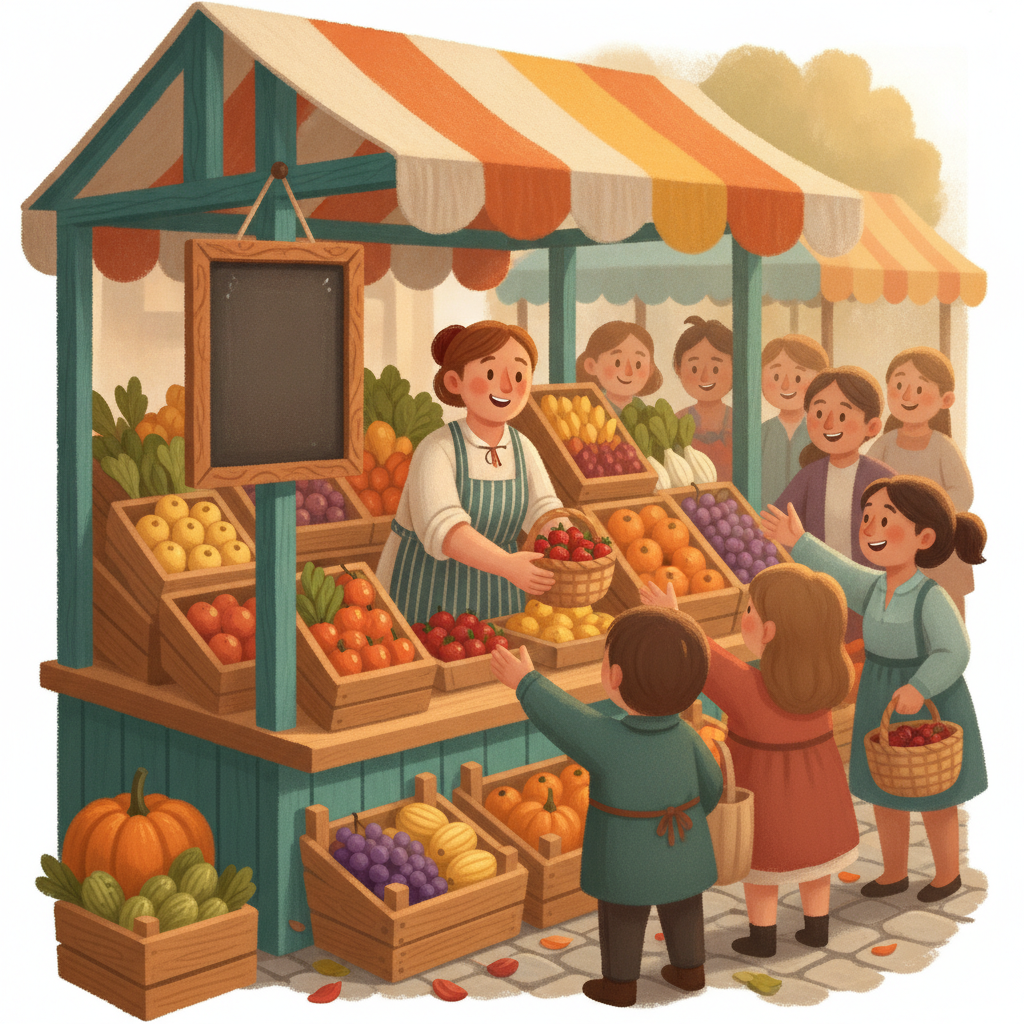
In the last lesson you saw that scarce things cost more. Now we'll turn that into the most famous idea in all of economics: supply and demand. Every price — for a saddle, a smoothie, a plane ticket, a rare pony — is set by a tug-of-war between how much people want a thing and how much of it is available. Learn to see both sides and you can explain, and even predict, why prices rise and fall.
Demand is how much of something people are willing to buy. The key pattern: when the price goes up, demand usually goes down — fewer people will buy an €80 bridle than a €20 one. Demand also rises when something becomes more popular or wanted.
Supply is how much of something sellers offer for sale. The key pattern: when the price goes up, supply usually goes up — sellers happily make more of something when they can charge more for it. Supply also falls when it's hard to produce (a bad strawberry harvest, a factory closing).
- Shortage (buyers want more than there is) → price is pushed up.
- Surplus (more for sale than people want) → price is pushed down.
A late frost in Spain destroys half the strawberry crop. What happens to the price of strawberries, and why?
Supply side: there are now far fewer strawberries for sale — supply has fallen.
Result: the same number of shoppers are chasing fewer strawberries — a shortage — so sellers can charge more. The price rises. (This is why out-of-season fruit is expensive: low supply.)
A stadium holds 20 000 seats, but 90 000 people want to see the show. Why do tickets end up so expensive?
Supply side: fixed — only 20 000 seats exist, no matter what.
Demand side: huge — 90 000 want in. With demand far above supply, people compete and bid the price up until only 20 000 are still willing to pay. High demand + fixed supply = high price.
-
Problem 1For each, say whether it mainly changes demand or supply: (a) a new film makes horse-riding suddenly trendy, (b) a drought kills half the hay crop, (c) a factory doubles how many riding helmets it makes, (d) everyone's pocket money is cut in half.demand or supply for each →
-
Problem 2In one sentence each: (a) what usually happens to demand when a price rises? (b) what usually happens to supply when a price rises?the two patterns →
-
Problem 3A shop has 100 water bottles but only 30 people want one today. Is this a shortage or a surplus? Which way will the price be pushed?compare wanted vs available → price up or down? →
-
Problem 4At a market stall, Mia records how many bags of carrots people want to buy at each price:
Price per bag Bags wanted (demand) €1 50 €2 40 €3 30 €4 20 (a) As the price rises, what happens to how many people want carrots? (b) By how many bags does demand fall for each €1 rise? (c) If the stall only brought 30 bags to sell, at which price would supply and demand match?read the pattern → find the constant drop → match to 30 → -
Problem 5A rare breed of pony has only 12 foals born this year, but 200 families want one. Use supply and demand to explain why these ponies sell for a very high price. What would happen to the price if the breed suddenly became common?demand vs supply → price → then more supply →
-
Problem 6A toy company makes fidget spinners. Last year they were a craze and sold for €10. This year everyone's bored of them, and the shops are still full of last year's stock. Predict what happens to the price, and explain using both demand and supply.demand fell + supply high → price? →
-
Problem 7 ChallengeAt a horse show, a snack stall finds that at €5 a burger, 60 people want one but they only cooked 20 (a shortage). At €9 a burger, only 20 people still want one — exactly the 20 they cooked. (a) What happened to demand as the price rose from €5 to €9? (b) Why is €9 the "balance price" here? (c) If they raise it to €12, they'd have burgers left unsold — what is that called, and what should they do with the price?demand change → why 9 balances → surplus → adjust →
-
Problem 8 OpenYou're running a lemonade stand at a summer market. Decide a price to charge, then explain: how would you know if your price is too high (surplus — lemonade left over) or too low (shortage — you sell out in ten minutes and could have charged more)? What would you change the next day in each case? There's no single right answer — reason it out.your price + how you'd read the signals →